
ONGOING RESEARCH
Participating in Digital Society
Digital citizenship and civic participation in later life
Explores how older adults use digital technologies to participate in civic and community life, contribute their knowledge and experience, and make their voices heard.
Research lead:
Xiaodan (Lizzy)
Research Lead:
Key insights
Older adults are active citizens and community contributors, not simply recipients of digital support.
Digital technologies can create new opportunities for civic participation but can also introduce new barriers.
The research explores how communities, local government and policymakers can enable more inclusive participation.
Impact in practice
The research could help community organisations and local governments design more inclusive ways for older adults to participate in civic and community life, while identifying structural barriers that policymakers can address.
About the research
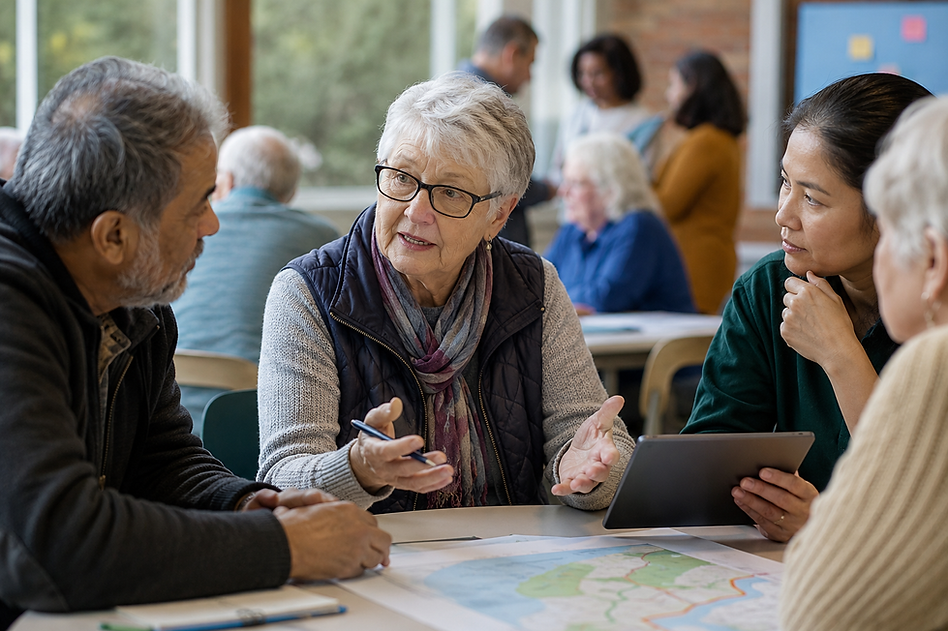
Older adults bring extensive knowledge, experience and expertise to their communities. They participate in civic life in many ways, from volunteering and contributing to community projects to engaging with local organisations and contacting political representatives.
Participating in Digital Society explores how digital technologies are shaping these opportunities for participation. The project examines how older adults enact digital citizenship: how they use digital technologies to participate in civic and community life, make their voices heard, contribute their knowledge and experience, and engage with issues that matter to them.
Rather than viewing older adults simply as people who need support to participate digitally, the project considers them as active citizens and contributors to their communities.
Why it matters
Digital technologies increasingly shape how people learn about community issues, communicate with organisations, access opportunities, contribute to public discussions and engage with government.
This creates new possibilities for civic participation, but it can also create new barriers. Understanding how older adults navigate this changing environment is important for ensuring that digitalisation does not narrow opportunities to participate in community and civic life.
For older adults, the research can help identify ways to participate according to their interests, knowledge and experience
For communities and local organisations, it can reveal better ways of inviting and enabling older adults' participation.
For policymakers, it can identify structural barriers and opportunities to create more inclusive forms of civic engagement.
Research focus
The central question guiding the project is "How do older adults enact digital citizenship?"
In particular, the research explores:
Civic participation: how older adults participate in volunteering, community projects, civic organisations and other forms of community life
Digital citizenship: how digital technologies become part of the ways older adults participate as citizens and community members.
Voice and contribution: how older adults use their lived and professional experience to contribute knowledge, ideas and perspectives.
Opportunities and barriers: what enables older adults to participate and what makes civic participation more difficult.
How the research is being conducted
The project uses a qualitative and participatory research approach to understand older adults' civic participation in the contexts where it occurs.
The research combines interviews and observation to learn about older adults' experiences of civic and community participation, including the role digital technologies play in enabling or constraining their involvement.
It also uses co-design workshops, creating opportunities for older adults to move beyond being research participants and contribute directly to thinking about how civic participation could be improved.
Bringing these approaches together allows the project to move from understanding older people's experiences to working with older adults to identify possibilities for more inclusive participation.
Meet the Researcher

Xiaodan (Lizzy)
Xiaodan (Lizzy) is a PhD researcher at RMIT University, whose research focuses on older adults' civic participation and digital citizenship. Lizzy is particularly interested in understanding how older adults can use their lived experience, professional knowledge and interests to contribute more fully to their communities and wider society.
Who the research is for
The research involves older adults and the communities in which civic participation takes place, with particular relevance for community organisations, local government and policymakers.
Potential impact
Participating in Digital Society aims to contribute to a better understanding of how older adults can participate meaningfully in civic and community life as society becomes increasingly digital.
The findings can help community organisations and local governments identify better ways to invite, support and sustain older adults' participation, while helping policymakers understand structural barriers that may prevent some older adults from participating.
Ultimately, the project seeks to support a view of later life in which older adults are recognised not simply as recipients of services, but as citizens with knowledge, experience and perspectives that can make valuable contributions to their communities and society.